Ali Messoudi

CEO

Ali watched Smart Sailors take shape through its early years in startup incubators, but it was in 2021 that he began contributing in earnest, joining the team to finalise the new versions and accelerate the commercial rollout of our solutions.

In 2025, Ali acquired the Smart Sailors software to invest in its continued development, while keeping the tools powerful and closely matched to what shipowners actually need.

Blog Posts

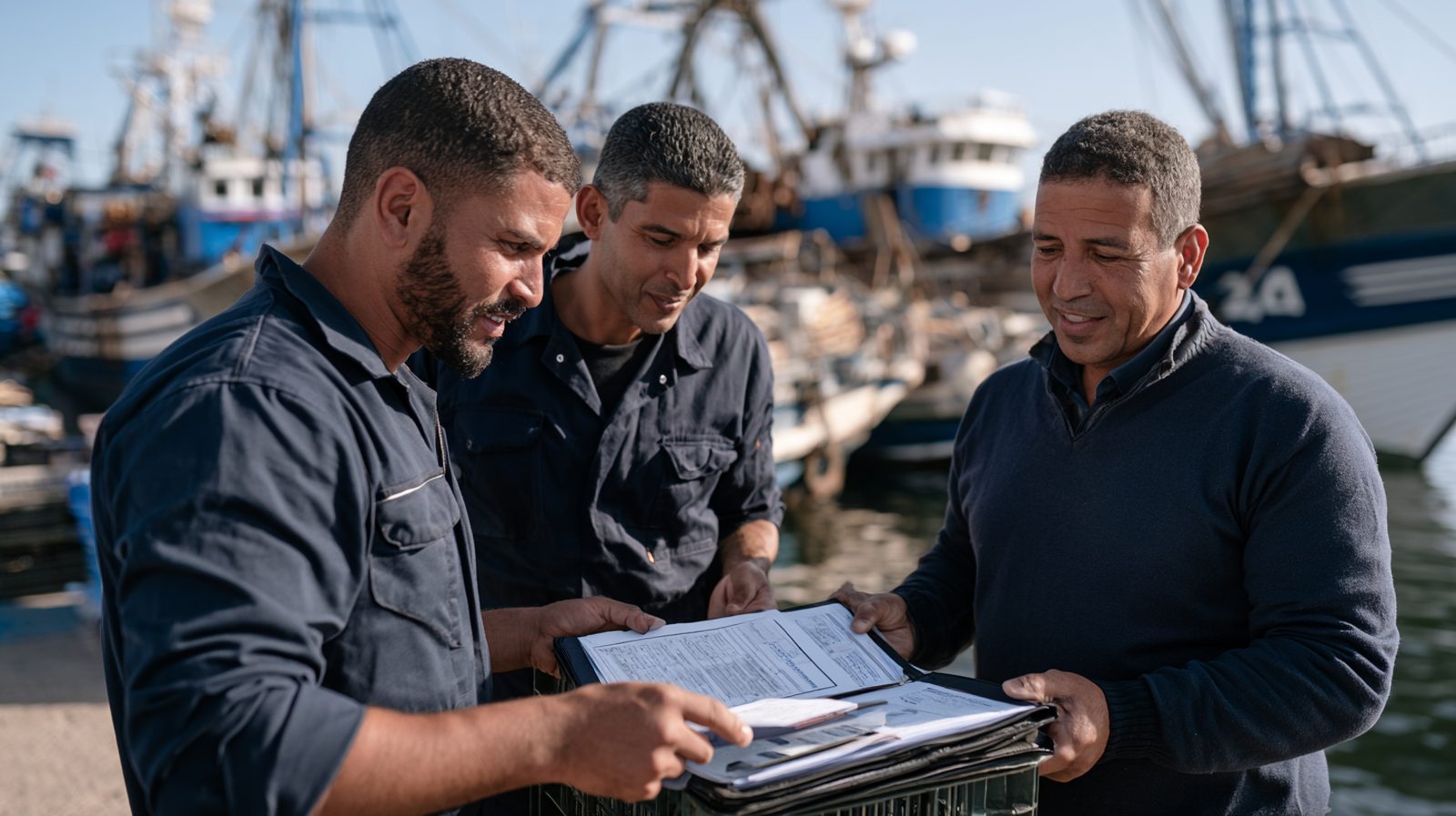
Officier de bord et agent portuaire examinant les certificats d'un navire de pêche hauturière à quai

Morocco deep-sea fishing vessel certificates: the complete guide

One expired certificate is enough to stop a trip. This guide sets out what a fishing vessel under the Moroccan flag has to carry — safety certificates, fishing licence, crew competencies, catch traceability — and the texts behind them, checked against two independent sources wherever possible. It includes two working tables: the ship's document file, and a twelve-month renewal calendar.

Read Story

Enclosed spaces: what resolution MSC.581(110) changes on board

Adopted on 27 June 2025, resolution MSC.581(110) revokes A.1050(27) and recasts the recommendations for enclosed space entry. Two new documents become expected on board: an Enclosed Space Register and a dedicated emergency response plan. This guide sets out the broadened definitions, the atmospheric thresholds, the gas detection equipment required and the update to your safety management system.

Read Story

15 Maritime Maintenance KPIs That Actually Matter (MTBF, MTTR, Backlog and More)

A dashboard that triggers no decision is worthless. This guide details 15 maritime maintenance KPIs across four families — reliability, execution, cost and compliance — each with its formula, unit, frequency, a realistic target range, the decision it triggers and the calculation trap to avoid.

Read Story

Vessel Maintenance Budget: How to Build It, Track It and Defend It

A line-by-line technical OPEX structure, three budgeting methods, how to cost a planned maintenance system, contingency provisions, monthly tracking on committed/actual/budget, and the argument that lets you defend every line in front of finance. Includes a fully worked illustrative example.

Read Story

Maritime CMMS: The Complete 2026 Guide to Vessel Maintenance Software

Intermittent connectivity, crew rotation, the ISM Code, logistical remoteness: maintenance on board is nothing like factory maintenance. This pillar guide explains what a maritime CMMS is, breaks down its architecture module by module, puts real figures on its ROI and sets out how to implement it without getting it wrong.

Read Story

How to Choose a Maritime CMMS: 32-Criteria Scorecard and RFP Template

A complete method for choosing a maritime CMMS: a 32-criteria scorecard in 6 families, weighting and scoring rules, trap questions for vendor demos, a reusable RFP template, the red flags that should stop a deal, and a worked 3-year total cost of ownership model for a six-vessel fleet.

Read Story

Maintenance safety on board: permit to work and isolation

On board, maintenance rarely kills through the tool and often through the atmosphere. This guide covers the four permits that frame a job at sea, isolation adapted to a vessel's energy sources, STCW competence requirements, and what resolution MSC.581(110), adopted by the IMO on 27 June 2025, changes for enclosed space entry.

Read Story

NMEA 2000 Data for Condition-Based Vessel Maintenance

The NMEA 2000 bus already carries engine temperature, oil pressure, tank levels and running hours. This article sets out which PGNs are genuinely useful for maintenance, how the gateway-to-cloud chain works, and how to set thresholds a crew will actually act on. It is also clear about where NMEA 2000 stops: a commercial ship's engine room.

Read Story

Anode Maintenance: Building a Replacement Plan and Tracking Cathodic Protection Across a Fleet

On one vessel a notebook is enough. Across a fleet you need a plan: a removal threshold, intervals matched to how each vessel is worked, potential readings, and the same record kept on every hull. This article covers how to build that plan, what to log at every removal, and how to use the history from several dockings to tune the interval.

Read Story

Ship Certificates and the Classification Survey Calendar: Running Them from a CMMS

A ship does not hold one certificate, it holds around twenty, issued by different authorities and driven by surveys whose windows do not line up. This article sets out who issues what, how the five-year survey cycle works, what a condition of class actually is and what extensions really allow — then how to run those schedules from a CMMS across several vessels.

Read Story

The Engine Room Logbook: What to Record and What It Proves

The engine room logbook is neither the deck log nor a MARPOL record book. It is the only continuous evidence that the machinery was run and maintained as intended. What goes in it, what it does not replace, what auditors and surveyors do with it, and what changes when it goes digital.

Read Story

QR Code Asset Tagging on a Ship: Marking, Scanning and Tracing Onboard Assets

On board, an identification label has to survive heat, vibration, salt spray and high-pressure washing. This article covers how to choose the label material for each area of the vessel, what to encode in the code itself, how to tag spares and safety equipment with expiry dates, and why offline scanning is what lets a newly joined officer retrieve an item's history without asking anyone.

Read Story

Condition-based maintenance on board: when to leave corrective behind

Ashore, a breakdown costs hours of downtime. At sea, it costs a port call, a tow, sometimes a detention. This guide gives the equation that decides the move to condition-based maintenance on a vessel: which assets to monitor, with which technologies, what classification societies will credit, and how to put figures on the return across a fleet.

Read Story

Vessel planned maintenance system: the 4-step method

A preventive maintenance plan that works ashore often fails on board: the crew changes every two months, the part only arrives at the next port call and the ISM auditor asks for proof. Here is the four-step method for building a PMS that is realistic, workable at sea and defensible at a classification society survey.

Read Story

The Boat Logbook: Is It Mandatory and What Must It Contain?

A logbook is compulsory for commercial ships under SOLAS and the ISM Code, and for French-flagged pleasure craft beyond 6 nautical miles from shelter under article 240-2.05 of Division 240. This guide sets out what it must contain line by line, how often to fill it in, what gives it evidential weight before a surveyor or an insurer, and how to choose between a paper book, an app and a printable template. With a genuinely completed extract from a crossing.

Read Story

Digitalising Fleet Maintenance: The Shipowner's 4-Step Guide

Owners do not digitalise maintenance because it is modern, but because ship-by-ship tracking has stopped holding together. This guide covers the decision at fleet level: what the bridge and the office each expect from it, how to keep one data standard across different ship types, how to phase the rollout, and how to measure the result.

Read Story

Spare Parts for Long Voyages: Building the Loadout List

On a long voyage there is no resupply and no express freight: whatever is not in the store room when you let go the lines will not exist for the whole trip. This article works through the loadout list — criticality, lead times, space and weight, tools, shelf life, stowage — and shows how the post-voyage debrief writes the next list.

Read Story

Marine engine oil analysis: spotting wear before failure

Oil analysis reveals internal engine wear hundreds of running hours before a failure. It only works if the sample is drawn properly, if wear metals and TBN are read in context, and if every result is tied to the equipment and the hour counter at the time of sampling. The full method, from bottle to work order.

Read Story

The ISM Code: definition, application on board and maintenance compliance

ISM stands for International Safety Management. This complete guide covers the Code end to end: its definition, its origin, the ships it applies to, the Safety Management System, the Designated Person Ashore, the difference between DOC and SMC, and how to handle chapters 9, 10 and 11 — the ones behind most audit findings.

Read Story

RCM on board: targeting maintenance at a ship's critical equipment

Reliability centered maintenance is not a method to apply everywhere: it decides where to concentrate maintenance effort on board. Here are the seven questions of the method applied to the main engine, generator sets, steering gear and sea water systems, together with three points specific to ships: reconciling the analysis with mandated tasks, hidden failures of standby arrangements under chapter 10.3 of the ISM Code, and the fleet effect across sister vessels.

Read Story

The maintenance job plan on board: passing on know-how when the crew changes

On board, the person carrying out a maintenance job plan has sometimes never seen the vessel, and the person who wrote it left the ship six months ago. The job plan becomes the only vehicle for transmitting know-how. How to write it for a multilingual crew, build work permits and hold points into it, keep it compliant with the ISM Code and reuse it across a series of sister ships.

Read Story

Digital Work Order on a Ship: The Full Life Cycle in a Marine CMMS

From request to analysis, the full life cycle of a work order on board a ship: why offline capture decides whether your records are reliable, how to hand an open job over at the change of watch, how planning is driven by port call windows, and why the work order is the unit of evidence examined by the ISM auditor and the port State control inspector.

Read Story

Marine Spare Parts Inventory: Think in Port Calls, Not Days

Ashore, the reorder point is expressed in days of supplier lead time. On board it has to be expressed in port calls, because it is the next call able to receive the goods that sets the real lead time. ABC classification, dual criticality of value and lead time, mandatory spares, the ship-shore split, dormant stock and the dry-docking kit: the full method applied to a ship's store.

Read Story

Annual Haul-Out Checklist: How a CMMS Guarantees Full Traceability of the Operation

The annual haul-out, point by point: preparation, lift-out, anodes, shaft line, antifouling, relaunch. The full checklist is set out in the article as tables, giving the acceptance criterion for each check and the data to record in the CMMS work order.

Read Story

Boat Anodes: Galvanic Corrosion, Alloy Choice and Reading Wastage

A sacrificial anode is not one more safety item on a list. It is a consumable whose job is to disappear instead of the propeller, the shaft and the skin fittings. This guide covers galvanic corrosion, the galvanic series, matching the alloy to the water, where anodes sit on board and how to read wastage properly.

Read Story